Programmes
Explore the Tamil Department's programmes and festivals designed to build language skills and cultural appreciation among students.
Programmes
A. Tamil Enrichment Programmes
1. Power Reading
Students from Primary 1 to Primary 6 participate in structured reading activities:
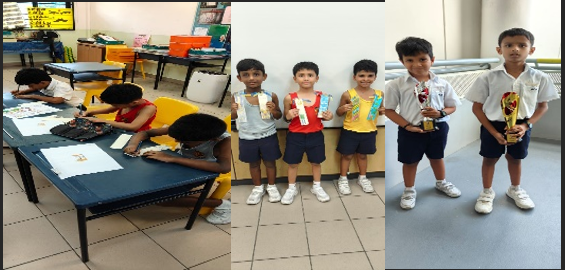
P1 & P2: Draw their favourite story character
P3 & P4: Design book jackets featuring their favourite character
P5 & P6: Identify beautiful words and phrases and write a short paragraph using them
This programme strengthens reading comprehension, creativity, and language appreciation.
2. Mother Tongue Fortnight (Tamil activities for Tamil students)
The Tamil Department organises Mother Tongue Fortnight to promote the learning of Tamil language and culture through engaging and meaningful activities.
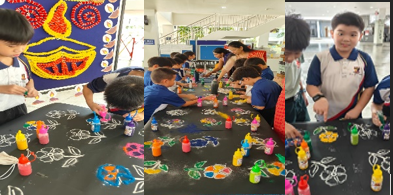
Over two weeks, students participate in role-play, dress-up, music, and dance activities conducted during lessons. They also take part in online hands-on activities such as palm- leaf weaving, kolam drawing, and henna designing.
Class competitions like word search and traditional games further enhance learning and create a vibrant language-learning atmosphere for all Tamil students.
Mother Tongue Fortnight ( Tamil Activities for Non-Tamil Students)
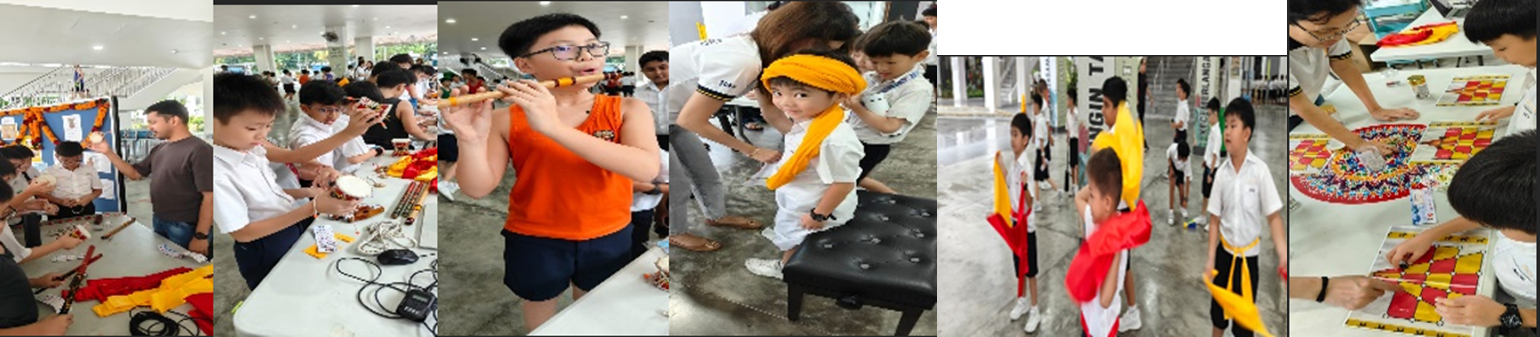
During Mother Tongue Fortnight, non-Tamil students are introduced to the Tamil language and culture through fun and interactive activities. They participate in simple Tamil greetings, traditional games, kolam drawing, music, and hands-on cultural activities. These experiences help students appreciate Tamil culture, promote inclusiveness, and spark interest in learning new languages in a joyful and meaningful way.
3. Hinch Programme
The Hinch Programme aims to develop students’ interest in Tamil through reading, comprehension, creative writing, and oral communication.
This after-school programme provides additional learning support for students who require more guidance and encouragement.
4. Pazhahutamil and SLS Online Learning
All students learning Tamil are provided with access to Pazhahutamil and SLS Online Learning.
These platforms allow students to learn and revise at their own pace, offering interactive lessons, rich illustrations, audio support, and oral practice materials. Teachers also use these platforms to support classroom instruction.
A. Festivals
1. Ponggal (Harvest Festival)
As part of our Ponggal students go on a learning journey to Indian Heritage Centre. They explore the significance of Ponggal, a harvest festival that celebrates gratitude, unity, and respect for nature. Through engaging activities such as learning about the four days of Ponggal, traditional practices, and cultural symbols, students gain a deeper understanding of Tamil culture. Students get to view the Ponggal exhibits and also participate in hands-on activities like colouring pictures of ponggal pot, role-play, and discussions, which make learning meaningful and enjoyable. This learning journey help students appreciate the values of thankfulness, community, and cultural heritage while strengthening their interest in the Tamil language.

2. Deepavali (Assembly Sharing – 10 Minutes)
Deepavali, also known as the Festival of Lights, is celebrated by Hindus to signify the triumph of good over evil and light over darkness.
During assembly, students share about the significance of Deepavali, explaining how families prepare for the festival by cleaning their homes, lighting oil lamps, wearing new clothes, and visiting relatives. They also highlight the importance of values such as gratitude, kindness, and togetherness.
Through this sharing, students gain a deeper understanding of Tamil culture and learn to appreciate the traditions and values celebrated during Deepavali. Deepavali (Assembly Sharing – 10 Minutes)
Deepavali, also known as the Festival of Lights, is celebrated by Hindus to signify the triumph of good over evil and light over darkness.
During assembly, students share about the significance of Deepavali, explaining how families prepare for the festival by cleaning their homes, lighting oil lamps, wearing new clothes, and visiting relatives. They also highlight the importance of values such as gratitude, kindness, and togetherness.
Through this sharing, students gain a deeper understanding of Tamil culture and learn to appreciate the traditions and values celebrated during Deepavali.
3. Deepavali Recess Activities (For All Students)
During recess, students take part in Deepavali-themed activities that introduce them to the joy and significance of the Festival of Lights. Through simple traditional games, kolam designs, greeting card designing, students learn about Tamil culture in a fun and inclusive environment. These activities foster cultural appreciation, friendship, and festive cheer among all students.